
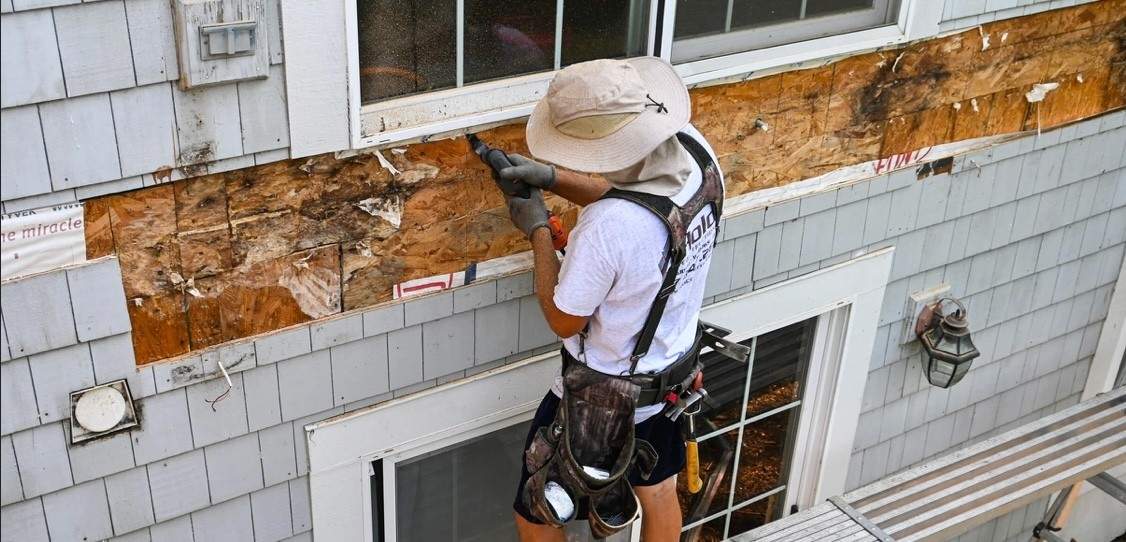
You have noticed a loose board, a crack near a window, soft trim, or another damaged area on your wood siding. Should you repair it now or wait until spring?
Short answer: It depends on whether the damage is mainly cosmetic or is allowing moisture, wind, or pests to get behind the siding. Some problems can wait, while others should be repaired before they lead to more damage.
For homeowners considering home siding repairs in Holly Springs, Raleigh, Cary, or Apex, First Choice Painters can inspect the affected area, check for underlying problems, and provide a clear estimate.
Schedule a Free Siding Estimate
When Should You Repair Wood Siding Before Spring?
Wood siding should be repaired sooner when the damage creates an opening, exposes the wall underneath, or shows signs that moisture is already affecting the siding or surrounding materials.
A Board or Section Is Loose or Missing
Loose siding can shift further during windy weather. Once a board or section pulls away from the wall, rain, insects, and other pests may reach the materials underneath.
If the board is still in good condition, it may be possible to secure it again. Split, warped, rotted, or badly deteriorated boards usually need to be replaced.
There Is a Crack, Hole, or Open Joint
Cracks, holes, and open joints can allow water to reach areas that should stay protected. Pay particular attention to damage around:
- Windows and exterior doors
- Rooflines and corners
- Trim and flashing
- Exterior vents
- Utility lines and fixtures
Caulk may seal a small gap, but damaged siding or moisture behind it needs proper repair.
The Siding or Trim Feels Soft
Soft, swollen, or crumbling wood can be a sign of moisture damage or decay.
Replacing the visible board alone may not solve the problem if water is still getting in through damaged flashing, failed caulking, leaking gutters, window joints, or another vulnerable area.
A proper exterior siding damage repair in Holly Springs should address the damaged material as well as the source of the moisture.
You See Water Stains Indoors
Interior stains, peeling paint, or dampness near an exterior wall should not be ignored until spring.
Water can travel behind the siding and through the wall, so the stain you see indoors may not be directly beside the place where water is entering.
An inspection can help identify whether the problem is coming from the siding, trim, flashing, or another part of the exterior.
The Siding Is Warped, Bulging, or Pulling Away
Wood siding that is warped, bulging, or separating from the wall may be reacting to moisture, movement in the material, fastening problems, or deterioration underneath.
The affected section may need to be secured, replaced, or temporarily removed so the wall behind it can be checked.
The Damage Appeared After a Storm
Strong winds, hail, and falling branches can split boards, loosen siding, and damage exterior trim.
Check corners, windows, vents, rooflines, and previously repaired areas. Photograph visible damage before repairs begin, especially if you may need a record of what happened.
Which Wood Siding Problems Can Wait Until Spring?
Not every siding issue requires immediate repair. Some problems are mainly cosmetic and can often be planned for spring if the siding is still secure and keeping the wall protected.
Waiting may be reasonable for:
- Light fading with no cracking or deterioration
- Shallow scratches that have not damaged the wood
- Surface staining with no signs of trapped moisture
- An older paint or stain color you want to update
- A planned exterior style change
- Secure siding with no gaps, movement, soft areas, or water entry
The key question is: Is the siding still protecting the wall?
If you are not sure, an inspection can help determine whether the problem needs attention now or can safely become a spring project.
Repair Now or Wait? Use This Quick Guide
| What you notice | What to do next |
| Loose or missing siding | Schedule an inspection |
| Crack or hole through a board | Repair or replace the damaged section |
| Soft or rotted siding or trim | Find and correct the moisture source |
| Water stains or indoor dampness | Arrange a prompt inspection |
| Warped or bulging boards | Check the siding and wall underneath |
| Minor fading or surface marks | Consider a spring project |
| Recent storm damage | Document it and request an assessment |
| Pests entering through a gap | Inspect and properly close the opening |
Can a Few Damaged Boards Be Repaired?
Yes, in many cases. A few damaged boards do not automatically mean the entire exterior needs new siding.
A targeted repair may work when the damage is limited, the surrounding siding is still in good condition, the wall underneath is sound, and compatible replacement material is available.
Matching the existing finish also matters. Older wood siding may have faded or weathered over time, so a new board can look different at first. Painting or staining the repaired section, or a larger portion of the wall, can help create a more consistent finish.
First Choice Painters handles siding repair, exterior carpentry, and painting, allowing the repair and finish work to be coordinated within the same project.
When Does Siding Replacement Make More Sense?
Replacement may be worth considering when deterioration has spread across several areas, multiple boards are failing, or the same sections continue to develop problems after previous repairs.
Widespread moisture damage can also make repeated patching less practical than replacing a larger section of siding.
Homes can also use different siding materials on different parts of the exterior. Wood siding may cover one area while another section uses vinyl or fiber cement. The repair method should match the material that is actually damaged. For example, vinyl siding repair in Raleigh, NC may involve securing loose panels or replacing sections that are cracked, warped, or damaged by impact.
If you are planning a larger exterior update, the replacement material and style should suit the home, maintenance needs, and existing architecture. Homeowners considering board and batten siding in Holly Springs can also explore it as part of a broader siding replacement project.
During the assessment, we review the condition of the existing exterior and explain whether targeted repairs or siding replacement in Raleigh, NC makes more sense for the affected area.
What If the Damage Extends Behind the Siding?
The visible siding is only the outer layer of the wall. Behind it may be a weather-resistant barrier, sheathing, framing, insulation, and other materials.
If water has reached these areas, simply installing a new siding board will not solve the entire problem.
Rotted trim, damaged sheathing, or weakened framing should be repaired before the siding is installed again. When the damage extends into the wood behind the exterior, a carpenter for siding repair in Raleigh, NC may be needed to repair the affected area before the wall is closed back up.
First Choice Painters can coordinate the siding repair, related carpentry, and painting so the damaged area is repaired and properly finished.
What Happens During a Siding Inspection?
A siding inspection helps determine how far the damage extends and whether a localized repair is enough.
First Choice Painters will check:
- Loose, cracked, warped, rotted, or missing siding
- Damage around windows, doors, vents, corners, and trim
- Flashing, caulking, and possible water-entry points
- Accessible sheathing or framing where hidden damage is suspected
- Whether repair or broader replacement is more practical
- Whether painting or staining is needed after the repair
You receive a clear estimate explaining the recommended work before the project begins.
Find Out Whether Your Wood Siding Can Wait
Cosmetic fading or minor surface wear may be able to wait until spring. Loose, cracked, soft, rotted, warped, or water-damaged siding deserves attention sooner.
The important question is not only how the siding looks today. It is whether the damaged area is still keeping moisture and pests away from the wall underneath.
First Choice Painters can repair damaged siding, underlying wood where necessary, exterior trim, and the surrounding finish. Call (919) 924-1677 or request your free estimate to find out whether your siding should be repaired now or can safely wait until spring.
Schedule Your Siding Inspection
Frequently Asked Questions
Can wood siding be repaired in the fall?
Yes. Fall can be a suitable time to repair loose, cracked, rotted, or water-damaged wood siding before colder weather arrives. The timing depends on the condition of the siding, the type of repair needed, and the weather during the work.
How do I know if I need siding repair or replacement?
Small, isolated areas can often be repaired. Replacement may make more sense when damage is widespread, several boards are deteriorating, moisture has affected multiple areas, or previously repaired sections continue to fail.
Can you replace just one damaged siding board?
Often, yes. We check the surrounding siding, the condition of the wall underneath, and whether a compatible replacement board is available before recommending the repair.
Why is my wood siding rotting around the windows?
Rot around windows often means moisture has been reaching the wood. The cause may be failed caulking, damaged flashing, deteriorated trim, or another opening around the window. The damaged wood should be repaired along with the source of the moisture.
Will new wood siding match the existing siding?
We look for a compatible material and profile. Older siding may have weathered, faded, or been painted over time, so the new board may also need painting or staining to blend with the surrounding exterior.
How much does wood siding repair cost?
The cost depends on how much siding needs repair, how easy the area is to access, and whether moisture has also damaged the trim, sheathing, or framing. An inspection provides a clearer picture of the work required and the expected cost.